
Home › Resources › Do You Need a Diagnosis?
Start here · Part 4 of 5 For parents who are new to special educational needs
Do You Need a Diagnosis?
NHS, Private, and What School Will Accept
Your child doesn’t need a diagnosis for help at school. The NHS route, Right to Choose, what makes a private assessment credible, and who accepts it.

By Lauren RobsonFounder, Education With Lauren · 18 November 2026 · 6 min read
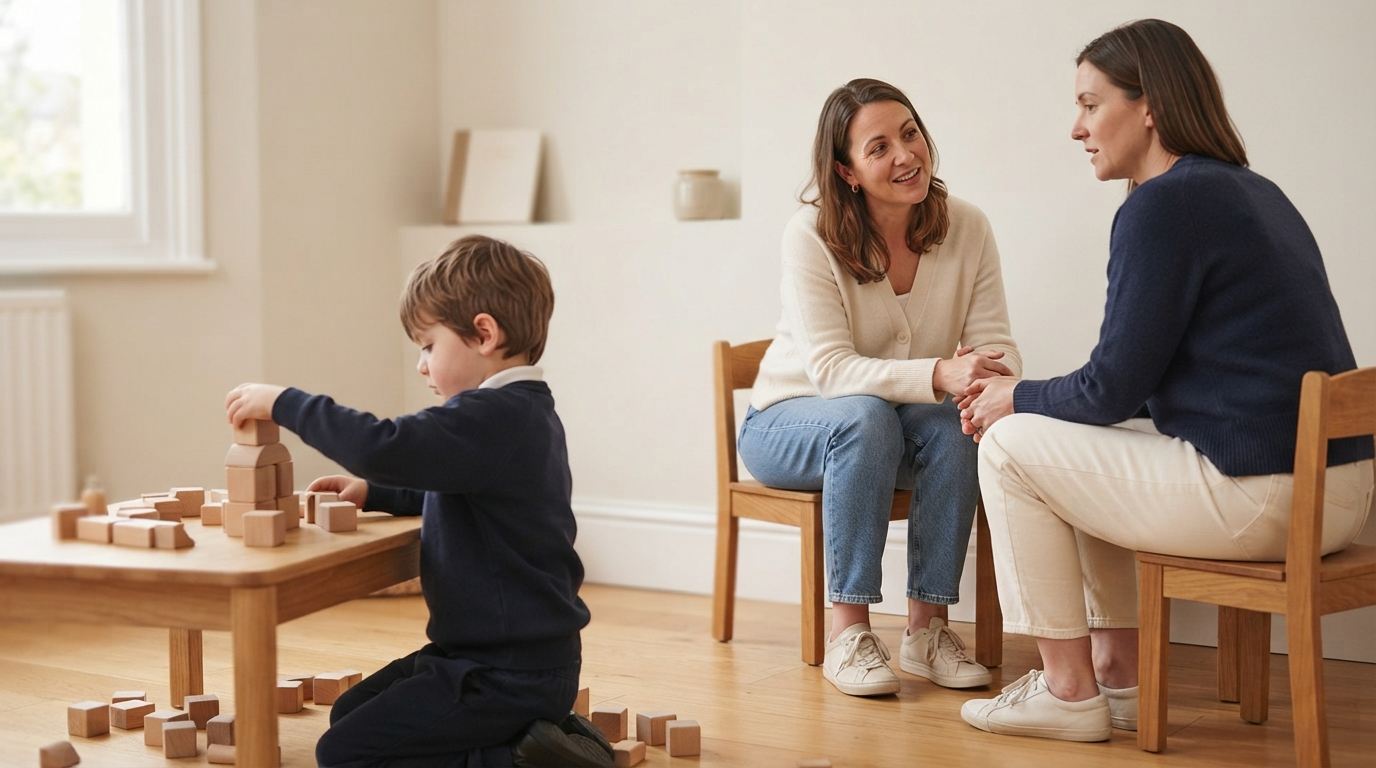
You’ve been told the wait for an assessment is long. Someone has said school can’t do anything until there’s a diagnosis. Someone else has said a private one “doesn’t count”. It’s hard to know what to believe, or whether to spend money you may not have.
Want to talk this through? The first 15-minute call is free.
Book a free call →The short answer: your child doesn’t need a diagnosis to get help at school. A diagnosis matters for other reasons, and there is more than one way to get one.
1. What school must do without one
School’s duty is based on what your child needs. The guidance every school must follow says the purpose of identifying a need “is to work out what action the school needs to take, not to fit a pupil into a category”. Reasonable adjustments work the same way: what counts is the effect on your child, not the cause.
So “we can’t do anything until there’s a diagnosis” isn’t right. The NHS says the same from its side: while a child waits for an ADHD assessment, they “should continue to get support at home and in school”. The government’s independent review of mental health, ADHD and autism made the same point in October 2026.
Parts 1 to 3 of this series cover what to ask school for now.
2. What a diagnosis is for
- Understanding. For many children and families, having a name for it helps.
- Medical treatment. If ADHD medicine might be right for your child, the NHS says it “must be started and monitored by an ADHD specialist”.
- Evidence. A diagnostic report is useful evidence for school and for an EHCP. On its own, though, it tells school what your child has, not how to teach them.
That last gap is where our own assessment sits. The Gap Analysis is an educational assessment, not a medical diagnosis. It looks at how your child learns and what school should do differently, and it needs no diagnosis and has no waiting list.
3. The NHS route
- Where to start. Talk to your GP or the school SENCO. For autism, the NHS says a GP can refer your child, though your child’s school may need to make the referral.
- Who assesses. For autism, national guidance describes a team that includes a paediatrician or child and adolescent psychiatrist, a speech and language therapist and a psychologist. For ADHD, the NHS says the assessment is with “one or more ADHD specialists, such as a paediatrician, or a child and adolescent psychiatrist”.
- How long. The guidance says an autism assessment should start within three months of referral. In practice it takes much longer. In September 2026, 336,764 people in England had an open referral for suspected autism, and 86.8% of them had been waiting at least 13 weeks. For ADHD, the NHS says a child “may have to wait several months or years”.
Don’t wait for the appointment before asking school for help. Our guide to what to do while you wait has more.
4. Right to Choose
In England, when a GP refers you to a specialist, in most cases you have a legal right to choose which service you go to. That can include an independent provider with an NHS contract, and the NHS pays.
It has limits. Local NHS bodies decide how many assessments each provider is funded to carry out. In Kent and Medway, Psicon, one of the largest Right to Choose providers, told families in July 2026 that routine autism and ADHD assessments were on hold and not expected to resume before April 2027. We explain what that means for Kent families. Ask your GP which providers are taking referrals now.
5. Going private: what makes an assessment credible
A private assessment is usually much quicker. It costs money and quality varies, so ask these before you book:
- Who will assess my child, and where are they registered? Doctors are on the General Medical Council register. Psychologists and speech and language therapists are on the Health and Care Professions Council register. You can search both online for free.
- Do you follow NICE guidance? NICE sets the national standard for autism and ADHD assessment.
- For autism, is more than one profession involved?
- Will you take a full history and hear from people who know my child? The guidance says an ADHD diagnosis should not be made on rating scales or observation alone. It needs a full assessment, including a developmental history and reports from other people.
- What will the report contain? A good one explains how the conclusion was reached and describes your child’s strengths and needs, not only a yes or no.
- If ADHD medicine might follow, who will prescribe it, and what will that cost over time?
6. Will a private diagnosis be accepted?
- School. School’s duty is to meet your child’s needs, so it isn’t really school’s job to accept or reject a diagnosis. A report from a registered professional is evidence of those needs, whoever paid for it.
- The council. If you ask for an EHC needs assessment, the law says the council must have regard to the evidence you send. Nothing says that evidence has to come from the NHS.
- The NHS. This is the one to check first. The NHS says a GP “may be able to take over prescribing ADHD medicines, but only if there is a ‘shared care agreement’”, and a GP does not have to agree to one. Ask your surgery before you book.
The assessment services we work with
Education With Lauren is not a clinical provider and does not diagnose. When a family wants a diagnostic assessment, we work with two separate organisations.
- Autism Assessment Centre. A local service led by Dr Faye Millner, Senior Clinical Psychologist. It assesses for both autism and ADHD, and travels to your home or your child’s school to carry out the assessment.
- The ADHD Centre. ADHD and autism diagnosis by GMC-registered consultant child and adolescent psychiatrists.
You can read about the clinicians on our professionals page. Put the same questions to them as you would to anyone else.
Free, independent advice
- Information, Advice and Support Kent (IASK) gives free, impartial advice to Kent families. Every council area in England has an equivalent service.
- IPSEA offers free legal information and advice on special educational needs.
- Contact is the charity for families with disabled children, with a free helpline.
The rest of this series
- Worried about your child at school? What to do first
- SEN support explained: what school must do without an EHCP
- Reasonable adjustments: examples, and how to ask for them
- Do you need a diagnosis? NHS, private, and what school will accept (this guide)
- Is it time for an EHCP?
Next: Part 5. Is it time for an EHCP? →
How we can help
If you’d like to talk it through, the first 15-minute call is free. We’ll listen, and tell you honestly whether we can help, including whether a diagnostic assessment looks like the right next step.
Whether or not you go on to seek a diagnosis, school needs to know what to do on Monday morning. Our Achieving & Thriving Gap Analysis is an independent educational assessment that shows how your child learns, where the gaps are and what is behind them, with a written report you can take to school. It costs from £395, and the standard turnaround for the report is up to 10 working days, or up to 14 at busy times. It is an educational assessment, not a medical diagnosis.

Lauren is the founder of Education With Lauren, a qualified teacher and SEND specialist with 16 years’ experience across mainstream schools, Kent County Council provisions and specialist settings. She holds a BA (Hons) in Primary Education with QTS (SpLD, Needs and Inclusion) and an MSc in Neuroscience and Brain Cognition, and is an approved education supplier to Kent County Council.
This guide is general information for parents in England. It is not legal or medical advice.
Sources
- Department for Education, Special educational needs and disability code of practice: 0 to 25 years (January 2015), paragraph 6.27
- Equality and Human Rights Commission, Technical Guidance for Schools in England, paragraph 5.105
- NHS, ADHD in children and young people; Autism assessments; Your choices in the NHS
- NICE, Autism spectrum disorder in under 19s: recognition, referral and diagnosis (CG128), recommendations 1.1.3, 1.5.1 and 1.5.5
- NICE, Attention deficit hyperactivity disorder: diagnosis and management (NG87), recommendations 1.3.1 and 1.3.2
- NHS England, Autism Statistics (published 12 November 2026)
- General Medical Council, Good practice in prescribing and managing medicines and devices, paragraphs 79 and 81
- Children and Families Act 2014, section 36
Not sure where to start?
A free 15-minute call comes first.
We’ll tell you honestly whether we can help.
- 07943 010892
- info@withlauren.uk
- West Malling, Kent. At home, at school or in a West Malling classroom.